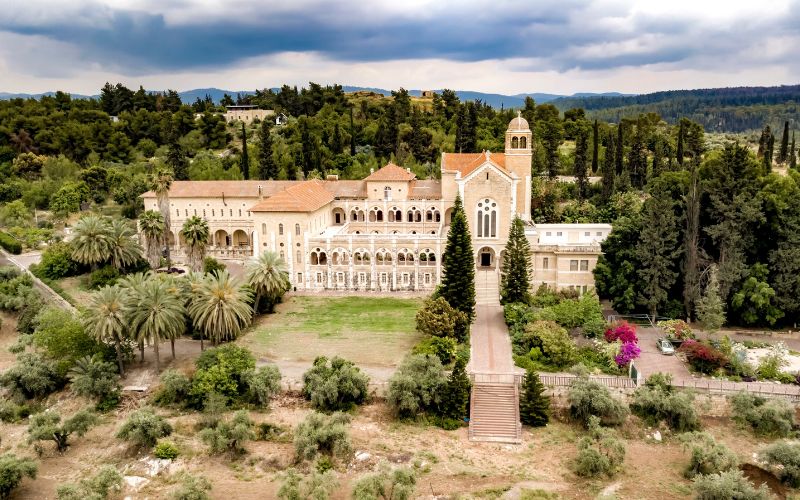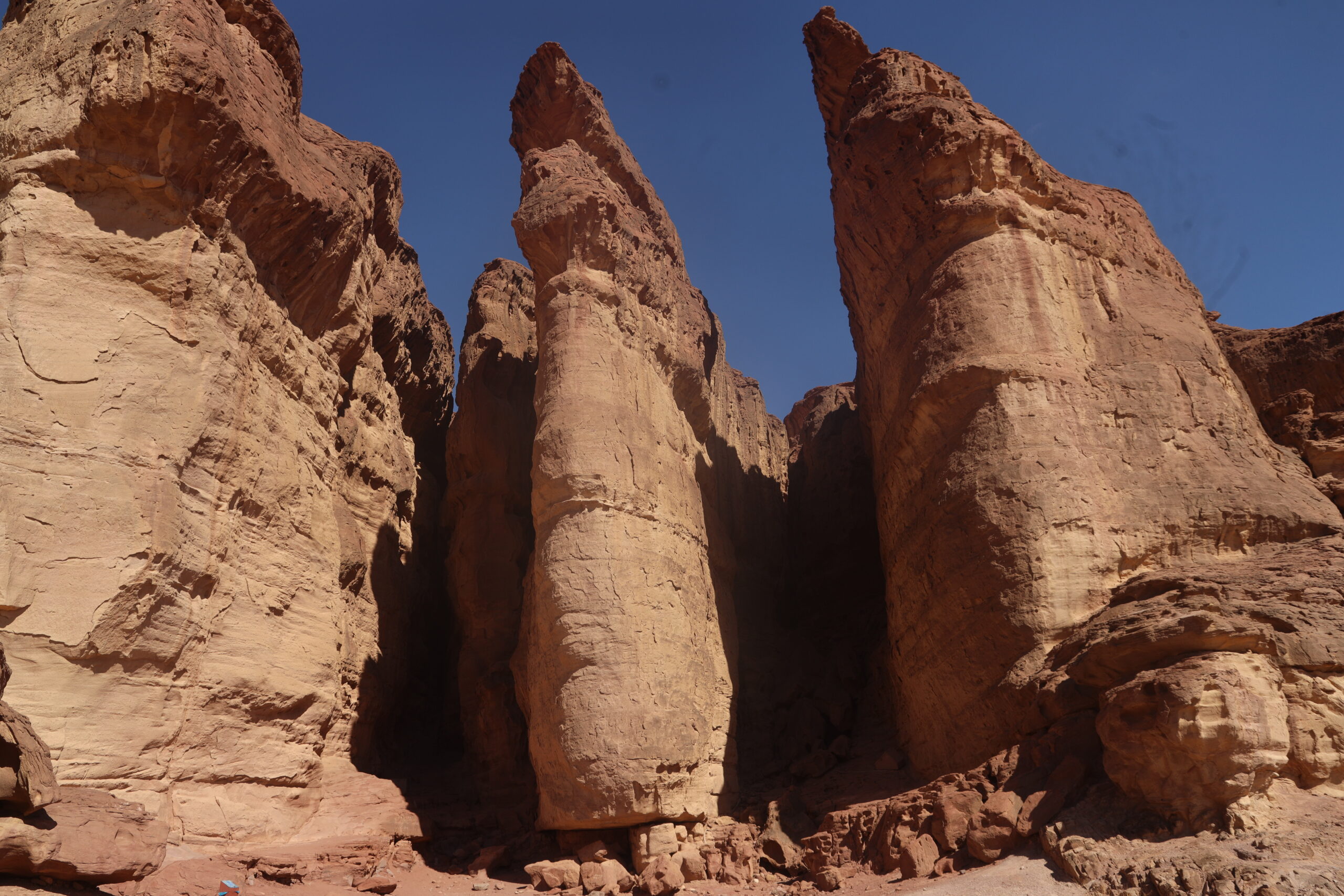

The gold dome catches morning light first. Then white monastery walls. Then green palms lining the Jordan River. Against miles of empty desert, this cluster of buildings seems almost impossible.
This is Qasr al-Yahud, the traditional site where John the Baptist baptized Jesus in the Jordan River. For filmmakers, the visual contrast alone is worth the trip. But there’s something else here, something you can’t build on a backlot: the weight of what happened.
Location Highlights
- Traditional site of Jesus’s baptism in the Jordan River
- Greek Orthodox Monastery with distinctive gold dome and fortress architecture
- Dramatic desert-to-water visual contrast ideal for wide shots
- Active pilgrimage site with authentic spiritual atmosphere
- 9 km from Jericho, 7 km from Dead Sea
- Managed access with cleared filming paths
- Best filming season: November-March (20-25°C)
- Requires coordination with Israeli Civil Administration and religious authorities
- Access to both Israeli and Jordanian sides of the river (separate permits)
- Multiple Orthodox monasteries creating architectural diversity
The Site: What you’re actually filming
Qasr al-Yahud sits 9 kilometers east of Jericho, 7 kilometers north of the Dead Sea. The Jordan River marks the border with Jordan here.
The centerpiece is the Greek Orthodox Monastery of St. John the Baptist. Built on Byzantine foundations, destroyed by earthquake in 1024, rebuilt in the 12th century. “Qasr” means castle in Arabic—fitting for the fortress appearance.
South from the monastery stretches the “Land of the Monasteries”—Russian chapel, Ethiopian monastery, Romanian monastery with green dome from 1934. Each tells a different pilgrimage story. Most remain off-limits, but what you can see gives you scale.

The desert light question
The Jordan Valley light is intense. Summer temperatures hit 38-40°C (100-104°F). The air shimmers. Shadows go hard.
Winter (November through March) is the practical filming season. Temperatures drop to 20-25°C. The light stays dramatic without punishing. Your crew can work without heat exhaustion.
What makes this different from the Judean Wilderness: you’re working next to water. The Jordan is maybe 10 meters across here, moving slow. It creates a microclimate. Green vegetation. Cooler air. Visual relief.
The contrast makes the shots work. Gold dome against blue sky. White monastery against brown hills. Green palms against beige sand.
Cinematography: What works on camera
Natural Light Conditions:
- Early morning (6-9 AM): Soft backlight on the monastery, gold dome catches first light
- Midday: Hard desert light requires careful exposure management, excellent for silhouettes
- Golden hour (4-6 PM): Warm tones emphasize the contrast between green vegetation and beige desert
- Overcast days: Rare but provide even lighting for detail shots of architecture
Composition Opportunities: The site naturally supports layered compositions. Foreground: green palms or river vegetation. Midground: white monastery buildings. Background: brown desert hills. The gold dome serves as a natural focal point visible from multiple angles.
Wide establishing shots benefit from the horizontal monastery layout. The kilometer-long “Land of Monasteries” road creates natural leading lines. Vertical contrast comes from the fortress tower and dome.
Sound Considerations: Desert silence is real here. You get clean audio for dialogue scenes. Water movement in the Jordan provides subtle natural ambience. Wind can pick up in afternoon – plan accordingly for boom operation.
From closed military zone to open set
After the Six-Day War in 1967, the Israeli military planted 4,000 mines here. Entry was prohibited. In 2011, after clearance operations, the site reopened under Israel Nature and Parks Authority management.
You can film at the river, main monastery, and access road. Cleared areas follow specific paths. Some buildings remain inaccessible. Know which angles work before bringing equipment.
Both sides of the river
The Jordanian side (Al-Maghtas) has larger facilities and more developed infrastructure. The biblical text says “Bethany beyond the Jordan”, technically the east bank. The western side became the traditional pilgrimage spot because it was easier to reach from Jerusalem.
For intimate monastery aesthetic, film the Israeli side. For shots showing both banks, Qasr al-Yahud looks across to Jordanian churches. Crossing between requires separate permits, most productions choose one side.
Production zones and best uses
The Baptismal Platform: Wooden ramps lead directly to the Jordan River. Works for baptism scenes (obviously), water-based interactions, and close-ups with natural reflections. Space is limited – plan blocking carefully for scenes with multiple actors.
The Main Monastery: Fortress-like Byzantine structure provides multiple shooting angles. Exterior walls work for establishing shots, period pieces, desert prophet narratives. The gold dome is visible for kilometers – use it as a landmark in wide shots.
Land of the Monasteries Road: 1.5 km path lined with abandoned Russian, Ethiopian, Romanian churches. Perfect for walking scenes, pilgrim processions, transitional moments. Each monastery building offers different architectural textures.
Best-Fit Productions:
- Baptism scenes and water-based spirituality
- Pilgrimage narratives where journey matters
- Desert prophet stories (the setting needs no set dressing)
- Spiritual transformation moments
- Historical pieces set in Byzantine or Crusader periods
- Documentaries on faith, archaeology, or modern pilgrimage
Consider Alternatives For:
- Large ensemble scenes requiring crowd control (space limitations on accessible paths)
- Complete historical accuracy for specific periods (modern structures visible, though frameable)
- Productions requiring extensive set builds (most areas must remain as-is)
What we bring
Biblical productions coordinated location access here since the site reopened. We know which permits you need, which religious authorities must be consulted, how to schedule around pilgrim traffic.
Desert heat, equipment protection, crew safety, we handle production logistics. Cultural sensitivity at active religious sites is non-negotiable. We facilitate the necessary conversations before cameras roll.
FAQ
Q: Can you film baptism scenes at the actual Jordan River?
Yes. Professional filming requires permits through the Israeli Civil Administration with advance site management notification. Wooden ramps provide river access. Schedule for early morning or coordinate around pilgrim activity.
Q: What’s the best filming season?
November-March. Winter temperatures stay at 20-25°C (68-77°F). Summer reaches 38-40°C (100-104°F), requiring heat protocols. Avoid Epiphany (mid-January) and Easter unless filming real ceremonies.
Q: How do you film both Israeli and Jordanian sides?
Each requires separate permits. Most productions choose one side. The Israeli side offers clear views across to Jordanian churches for shots showing both banks.
Q: What makes the monastery architecture unique for filming?
Byzantine-Crusader fusion creates distinctive fortress appearance with gold dome visible for kilometers. Multiple Orthodox traditions (Russian, Ethiopian, Romanian, Coptic, Syrian) create architectural variety in a compact area, rare for single-monastery locations.